Fair-Weather Fiction: What Really Happens When You Fly Through a British Autumn
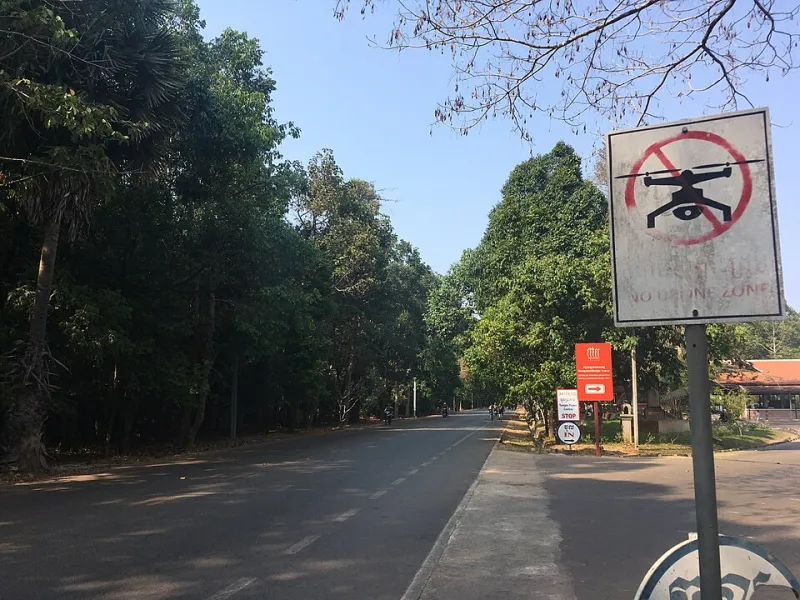
Photo: Editorq35, CC BY-SA 4.0, via Wikimedia Commons
There's a particular kind of drone footage that dominates YouTube: a cliff edge, low sun, an impossible shade of turquoise water, and not a breath of wind. It's beautiful. It's also about as representative of flying in Britain in November as a Caribbean holiday advert.
I've spent the last month doing the opposite — deliberately taking drones out on grey, gusty, drizzling afternoons across the Midlands and the Peak District, flying from the sort of muddy field where the gate is tied shut with baler twine. Some of it was grim. Some of it produced the best footage I've shot all year. Here's the honest version, because the marketing material won't give it to you.
The wind number on the box is not the number you think it is
Nearly every consumer drone quotes a "wind resistance level", usually Level 5, which maps to about 10.7 m/s or roughly 24mph. Sounds reassuring. What the spec sheet doesn't say is that this figure describes the point at which the aircraft can still hold position and come home — not the point at which the gimbal produces smooth footage.
In my experience the usable ceiling for clean video is far lower. Around 12–15mph with gusts, most sub-250g drones start making micro-corrections you can see in the footage, and a slow pan becomes a twitchy one. Above 20mph you're fighting the aircraft rather than filming with it, and battery drains noticeably faster because the motors are working constantly to hold attitude.
Gusts are the real enemy, not steady wind. A constant breeze is manageable; a wind that drops to nothing and then slams back at 22mph will make even a well-behaved drone lurch mid-shot. Check the Met Office gusts column, not just the average, and be honest with yourself about whether you'd enjoy standing in it.
A heavier airframe helps enormously. The difference between a 249g drone and something in the 700g–900g bracket on a blustery day is night and day — but you pay for it in regulation, since the heavier class pushes you out of the simplest category.
Assume nothing is waterproof, because almost nothing is
Here's the bit that catches people out. The overwhelming majority of consumer drones carry no IP rating at all. An IP43 or IP54 figure is a genuine engineering claim; the absence of one means the manufacturer hasn't tested or won't commit. Some enterprise models and a handful of specialist splash-rated aircraft aside, your drone is a flying computer with exposed vents.
Drizzle is survivable — the airflow from the props tends to keep light moisture off — but it is not a licence to fly in rain. Water ingress kills gimbals, and the failure is often delayed, showing up as a jittering horizon two days later. Salt spray from a coastal flight is worse still.
Two habits worth adopting. First, don't launch from wet grass or a damp wall; moisture wicks up into the motor bells. Second, when you come back inside, seal the drone in a zip bag before it warms up. Condensation forms when cold metal meets warm indoor air, and that's how a working drone becomes a corroded one.
Grey skies are a camera problem, not a weather problem
Overcast light flattens everything. Contrast disappears, colours go milky, and the sensor has to work harder because there's simply less light reaching it late in the afternoon. This is where cheap drones fall apart and decent ones quietly impress.
Small sensors at high ISO produce mush, and no amount of sharpening in post rescues it. If your drone has a flat or log profile, use it on grey days — you'll need the extra headroom to pull contrast back. If it doesn't, drop the sharpening and saturation in-camera rather than letting the processor over-cook the image, and set white balance manually around 6500–7000K instead of letting auto drift between shots.
Grey days do come with a gift: no harsh shadows means you can shoot at midday without the usual ugliness, and diffused light is genuinely flattering for woodland, stone and water. Some of my favourite footage of the year came from a featureless pewter sky over a reservoir.
Cold batteries and a four o'clock sunset
Lithium packs hate the cold. Below about 10°C you'll see voltage sag, sudden percentage drops and premature low-battery warnings. Keep spares in an inside pocket, not a rucksack, and don't launch with a pack that's been sitting in a cold car overnight.
Then there's daylight. In early November, sunset in Manchester is around 16:20, and by the time you've driven to a location and walked in, you've got perhaps ninety minutes of usable light. Plan the shot before you arrive. Flying by the light of a phone screen at dusk is how people lose drones in hedges.
Which drones came out, and which stayed in the bag
Anything in the sub-250g class with a Level 5 wind rating is a fair-weather tool in my book — brilliant, portable, and best kept for days under about 15mph. Step up to a larger airframe with a bigger sensor and you'll shoot confidently through a blustery afternoon and come home with footage that survives the grey. Genuinely wet weather is a no for everything I've flown that a normal person can afford, drizzle aside.
If it's properly tipping down, the correct answer is a flask and a walk without the drone. The countryside isn't going anywhere, and neither is the shot.