The Wednesday Window: Timing Drone Firmware Updates So Saturday Still Flies
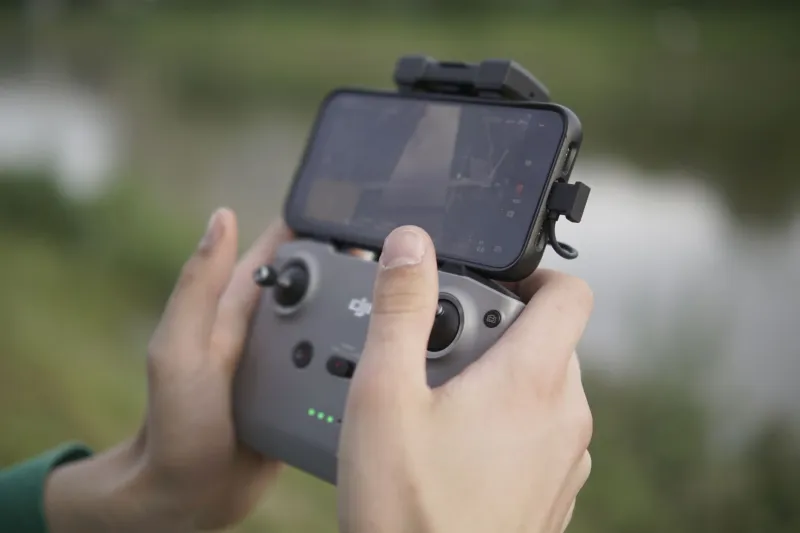
There's a particular kind of optimism that comes with tapping "Update Now" at 9pm on a Thursday. Four batteries are on charge, the Met Office is promising a dry Saturday morning, and the drone is sitting on the kitchen table blinking at you. What could possibly go wrong between now and dawn?
Plenty, as it happens — and almost none of it is dramatic. Firmware rarely bricks a drone outright. More often it quietly resets your return-to-home altitude, nudges the gimbal horizon, or changes how the aircraft behaves in a gust. You don't notice until you're standing in a field at 8am with cold fingers and a slightly wrong horizon on every clip.
This isn't an argument against updating. It's an argument for doing it on a Wednesday.
Why the Weekend Is the Riskiest Time to Press Update
A firmware update isn't a single event. It's a change to a system, and systems need testing. Testing needs three things you don't have on a Saturday morning: daylight to spare, a known field with no one waiting on you, and a support line that's actually open.
Most manufacturers run support desks Monday to Friday. If a new version makes your gimbal twitchy on a Saturday, you're not getting an answer until Monday afternoon — by which time you've either cancelled plans or flown something you weren't fully confident in. Neither is a good outcome.
There's a UK wrinkle too. With the clocks gone back and sunset landing before five, your usable flying window in November is short. A 40-minute test flight is a much bigger chunk of a Saturday than it is of a June evening. Compressing the test is exactly how you miss the thing that changed.
Reading Release Notes With UK Eyes
Release notes are written by marketing, filtered by legal, and read by almost nobody. Read them anyway — but read them for specific things rather than the headline feature.
Flight behaviour in wind. Anything mentioning attitude control, descent rate, or maximum wind resistance deserves attention. British flying often means a steady 12mph with gusts, and a tweak that makes the aircraft hold position more aggressively can also make it twitchier in yaw.
Return-to-home logic. RTH altitude defaults, the behaviour when signal drops, and how the aircraft handles a headwind on the way home. If a version resets your RTH height to 30m, you've just undone a setting you made deliberately for a reason.
Transmission and band switching. Changes to how the controller hops between 2.4GHz and 5.8GHz can shift real-world range in busy areas. Our own experience is that this is where 'improvements' are least predictable.
Geofencing and airspace data. Updates sometimes refresh restricted-zone databases. In the UK that can mean changes around airports, prisons, MoD land and stadiums. Worth knowing before you drive somewhere.
Camera and colour pipeline. Bitrate, sharpening, noise reduction and default colour profiles get quietly adjusted. If you shoot flat profiles and grade afterwards, a change to the default look matters more than a new quick-shot mode.
Battery management. Cold-weather handling and cell balancing logic appear here. Relevant if, like most of us, you fly more between October and March than the marketing assumes.
If the notes say 'optimised flight experience' and nothing else, treat that as an unknown quantity rather than a small one.
What Updates Actually Reset
This is the bit nobody warns you about. A firmware flash can wipe custom button assignments, reset camera settings to auto, clear your RTH altitude, and put obstacle sensing back to its factory stance. It can also require a fresh compass or IMU calibration before the aircraft will arm.
Keep a note on your phone — a photo of your settings screens is enough — so you can compare afterwards. It takes two minutes and saves a lot of squinting at menus in a car park.
A Twelve-Minute Field Test That Earns Its Keep
Once the update is on, don't launch straight into a job or a scenic flight. Take it to a local recreation ground on a weekday evening and run a short, boring checklist:
- Calibrate if prompted, then check the gimbal horizon against a known straight edge.
- Hover at 2m and watch for drift or twitchiness in a light breeze.
- Trigger RTH from a low altitude and confirm the height and landing behaviour.
- Switch between normal and sport modes and listen for anything new.
- Record 30 seconds of 4K and check the file on a laptop, not just the phone.
- Confirm telemetry — satellite count, battery cell balance, signal bars — reads sensibly.
Do this somewhere you have permission to fly. A National Trust car park or a busy park on a Sunday isn't the place; a quiet rec with the landowner's blessing is.
If It Goes Wrong: The Honest Truth About Rollback
Rollback is often described as a simple undo. It isn't. On many consumer drones, downgrading is either blocked outright or limited to a desktop assistant tool with an older firmware file that may no longer be hosted. Some models allow it, some don't, and the workarounds floating around forums can void warranties or brick the aircraft.
A more reliable plan is prevention. Turn off automatic app updates on your phone, and switch off auto-firmware in the flight app. Keep a note of the version that flew well for you, along with the date. If a new release misbehaves, ground the aircraft, document what changed, and contact support on Monday with specifics rather than vibes.
And remember: a firmware update doesn't change your legal responsibilities. You're still the pilot in command, still bound by the CAA's rules, and still responsible for whether the aircraft is fit to fly. If it's behaving oddly, it isn't.
A Simple Calendar That Works
- Update Tuesday or Wednesday, never within 48 hours of a paid job, a holiday, or a drive to a spot you've been planning for weeks.
- Read the notes before you tap the button, not after.
- Photograph your settings beforehand.
- Test in a low-stakes field before anything that matters.
- Keep the previous version number written down.
None of this is glamorous. But the Wednesday window means that if something does change, you've got three evenings to notice it, test it, and decide — rather than discovering it at sunrise with cold hands and a client waiting.