Ground Truth: What a Folding Landing Pad Actually Saves You From
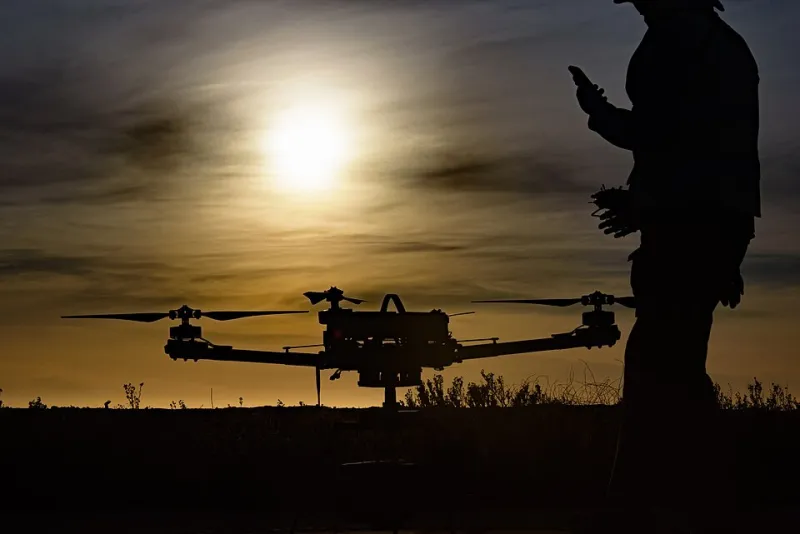
Photo: NASA Ames Research Center / Don Richey, Public domain, via Wikimedia Commons
The first Saturday in November, 7.40am, a recreation ground in Surrey that had been rained on since Thursday. I had a folding landing pad under one arm, a mug of tea going cold on a bench, and a drone that I was not especially keen to dunk in wet grass. The pad is the sort of thing that gets bundled into beginner kits and recommended in every forum thread with the same confident line: it keeps your drone off the wet ground. Half an hour later, the pad was soaked through, one corner had curled up, and the drone had still landed in a patch of dew. So what is a landing pad actually for?
What the Pad Is Genuinely Good At
Let us give the folding pad its due. On dry ground it does three useful jobs. First, camera clearance: on gravel, rough pasture or a stony car park, the extra inch or two under the legs stops the gimbal and lens housing from grazing anything. Second, prop wash control: take off from bare soil and the downwash throws grit and grass cuttings straight back into the airframe. A pad gives the wash something flat to hit. Third, confidence: a bright orange square is easier to spot on a video feed than a patch of identical-looking grass, and that matters when you are bringing a drone home in a hurry.
None of that is nothing. But none of it is waterproofing either.
The Wet Grass Test
I set up three takeoffs. First from open grass, second from the pad laid on grass, third from the pad on a slight slope near the touchline. Conditions were typical late autumn: heavy dew, soft turf, no wind to speak of.
On open grass, the drone's legs sank about a centimetre and the props flicked up a fine spray of water and cuttings. No disaster, but messy. On the pad, the takeoff was cleaner. The landing, however, was where things got interesting. The pad's fabric had absorbed water from the grass below within minutes, and its plastic feet were slick. When the drone came down slightly off-centre, the pad shifted a few centimetres and the drone tipped onto one leg before recovering. On the slope, the pad slid about a hand's width during the takeoff itself.
The lesson was not that the pad failed. It was that the pad is only as stable and dry as the ground underneath it. On wet grass, it is a damp doormat with a logo on it.
What It Cannot Fix: Moisture
A landing pad sits on top of wet ground. It does not dry the air, warm the battery, or stop condensation forming on a cold lens. If the grass is wet enough to soak through the fabric, the drone is still landing in a damp microclimate. Worse, the pad itself holds water. Fold it away wet, leave it in the car, and by the next flight it smells like a pond and sheds moisture onto whatever it touches.
If your real concern is moisture ingress, the pad is the wrong tool. Keep spare silica gel in the case, dry the drone with a microfibre cloth after landing, and do not pack it away wet. A pad does none of that for you.
The Slip Problem
Most folding pads have a smooth underside and a rim that sits proud of the ground. On dry grass that is fine. On wet grass, especially a slight camber, the pad becomes a small sled. The drone's own downwash does not help: it pushes air under the edges and can lift a lightweight pad just enough to break friction. If the pad moves while the drone is landing, you get a tip-over, a chipped prop, or worse.
A heavier mat with a textured base is better. A cheap rubber car boot liner is better still.
Soft Ground and the Sinking Feeling
On muddy ground, the pad's feet sink at different rates. What starts level ends up uneven, and an uneven pad is worse than plain grass because it gives the drone a false sense of a flat surface. If the ground is soft enough to leave boot prints, a thin folding pad is not the answer. Something rigid and wide, like a piece of plywood or a plastic gravel tray, spreads the load properly.
Cheap Alternatives That Beat a £25 Pad
A rubber car mat or boot liner from a motor factors costs about a tenner, weighs more, and grips wet grass far better. A closed-cell foam camping mat cut to size is light, cheap and does not absorb water. A heavy-duty rubble sack laid flat gives you a clean marker for landing without pretending to be a stable platform. And on genuinely foul mornings, the cheapest option is no pad at all: hand launch and hand catch.
Hand Launch and Catch: When It Is Genuinely Better
Hand launching is not a stunt. For a sub-250g drone on a wet morning it is often the cleanest option. Hold the drone level, props idling, firm grip on the body away from the gimbal, then raise the throttle steadily until it pulls clear. To catch, bring it down to chest height, hold your open palm under the belly, and let it settle rather than grabbing. Check your manual first, keep fingers clear of props, and do not attempt it in gusty wind. It takes practice, but it keeps the drone out of the wet entirely.
When to Leave the Pad at Home
Windy days, when a light pad flaps and skitters. Long walks, when the extra bulk is not worth it. Sandy beaches, where a pad traps grit against the airframe. And any morning when the grass is wet enough that the pad will be wet within a minute. In those cases, a rubber mat, a dry hand launch, or a simple patch of bare ground will serve you better.
The Verdict
A folding landing pad is a decent answer to gravel, dust and rough ground. It is not a raincoat, a levelling device, or a substitute for reading the ground before you unpack. On a damp November morning, the pad is the least important thing in your kit bag. Look at where you are standing, check the camber, and decide whether the ground or your hand is the better launch pad. Usually, it is your hand.