Bumpers On: Why a Cheap Trainer Drone Should Come Before Your Camera Ship
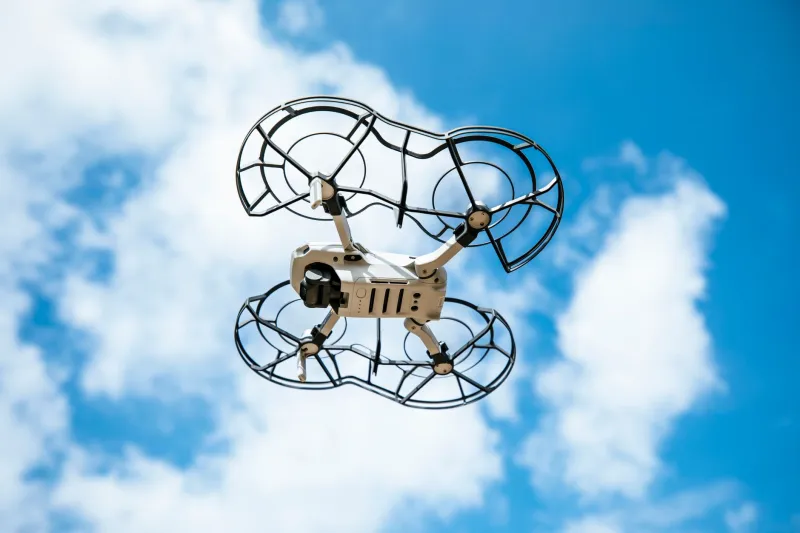
There's a moment every new pilot knows. The drone drifts, you correct the wrong way, and it makes a beeline for the nearest thing you'd rather it didn't hit. If that drone cost you £40 and has prop guards, you laugh, pick it up and carry on. If it cost you £700 and the gimbal took the impact, you're posting a sad photo in a Facebook group and waiting three weeks for a repair quote.
So here's the argument I make to anyone who asks me what to buy first: buy the wrong drone on purpose. Not a bad one — a disposable one. A trainer. Something you are genuinely happy to write off, because for the first ten flights that's exactly what it is.
The maths nobody does at checkout
A replacement arm on a folding camera drone can run to a quarter of the machine's value. A gimbal ribbon cable is not a kitchen-table job. Even a set of genuine props for a big-name model costs more than an entire toy-grade quad with two spare sets in the box.
None of that matters if you never crash. Everyone crashes.
And it's not only the repair bill. The real cost of learning on the good drone is timidity. If you're frightened of the thing, you fly it in wide, careful, boring arcs at a safe altitude — which teaches you almost nothing about control. A drone you don't care about lets you fly low, fly close and make mistakes at the speed mistakes actually happen.
What 'sacrificial' means in spec terms
You're not looking for the cheapest thing on the internet. You're looking for the cheapest thing that will survive being taught on.
- Under 250g. Keeps the paperwork light and the momentum low — a 240g quad bouncing off a fence is a non-event.
- No camera, ideally. In the UK, a camera is what tips a sub-250g drone into operator registration territory. A camera-less toy quad can genuinely be flown with no CAA registration at all. If you want the trainer to double as a filming tool, fine, but understand you're then in the system.
- Prop guards, and spares in the box. Guards turn a broken prop into a scuffed prop. Two spare sets mean one bad afternoon doesn't end your week.
- Brushed motors are fine. They'll be tired after 30 or 40 flights. That's the point — the whole aircraft is consumable.
- Altitude hold and a bit of stabilisation. You want it to hover hands-off-ish so you can think. You don't want GPS, waypoints or a gimbal. Those are the parts that cost money and teach you nothing yet.
- Parts availability. Buy from a shop that sells spares for that exact model, not a marketplace listing that vanishes. A £40 drone you can't buy props for is a £40 paperweight.
The rules don't get cheaper because the drone did
This is the bit people skip. Price and weight change your registration obligations, not your duty of care.
Every flight in the UK still sits under the Dronecode: keep it in visual line of sight, stay below 120m, never fly near aircraft or airports, and keep your distance from people who aren't involved. A cheap quad is still capable of causing real harm and still carries the same privacy expectations when it's hovering over a neighbour's garden.
Registration-wise: Flyer ID is required for anything at or above 250g. Operator ID is required at 250g and above, and also for lighter drones that carry a camera. A sub-250g camera drone also has to be kept away from people rather than flown over them. And if you're flying FPV or racing under an Article 16 authorisation with a club, that's a different rulebook again — worth checking before you assume the little one is exempt from everything.
One more: toy-grade drones are still drones in the eyes of anyone whose car you've just clipped.
Ten flights, ten jobs
Don't just hover around a field until the batteries are dead. Give each outing a target.
- Battery one: lift, hold a steady hover at head height for a full battery. Nothing else. Just throttle.
- Battery two: fly a square, tail-in, turning with yaw only on the corners.
- Battery three: figure of eight, tail-in, slow enough that you can talk over it.
- Battery four: nose-in hover. This is the one that hurts. Sit with it.
- Battery five: spot landings. Pick a marker, land on it, ten times.
- Battery six: low, slow circuits at knee height, keeping a constant distance from a line of cones.
- Battery seven: pick a breezy day. Learn what wind does to a light aircraft and how much correction it takes.
- Battery eight: deliberate disorientation. Spin it, let it get away from you, recover calmly.
- Battery nine: 'framing' without a camera — yaw to track a moving target (a mate walking) while holding altitude.
- Battery ten: a full simulated mission. Take off, fly a route, come back, land where you started, no fuss.
Which of that actually transfers
Plenty, and not the bits you'd expect. A GPS camera drone flies itself most of the time, so the hovering and position-holding you drill won't be needed — until GPS drops out, or you're in a tight spot, or you're hand-catching in a garden and the thing starts to wander.
What transfers is your thumb. Throttle discipline. The instinct to yaw first and translate second. The ability to look at a drone pointing towards you and push the stick the right way without thinking about it. Those habits are formed on cheap plastic and they last.
When to graduate
You're ready when you can hold a nose-in hover for a minute without panic, land within a metre of a marker on demand, and fly a clean figure of eight in a light breeze — all without the little voice in your head narrating the crash. For most people that's ten to fifteen outings, spread over a few weeks.
Even then, keep the trainer. It's the one you fly in a gale, the one you lend to a curious mate, the one you take on holiday. The good drone gets the good days. The sacrificial one earns its £40 back the first time it eats a crash that would otherwise have cost you a gimbal.