The Kitchen-Table Handover: Who Owns, Who Flies, and Which UK Drone ID Goes Where

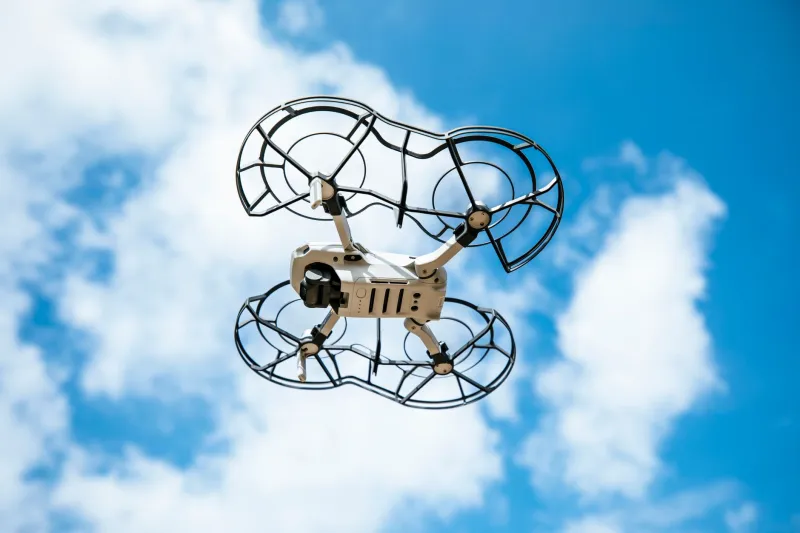
Photo: Anton, CC BY-SA 4.0, via Wikimedia Commons
A drone arrives in a household and immediately becomes communal property. One person buys it, another charges it, a teenager claims it as theirs, and a friend asks to borrow it for a Saturday afternoon in the park. That is exactly the moment the UK’s two-name registration system starts to feel less like paperwork and more like a family logistics problem.
The CAA’s scheme, as it stands in 2026, separates two roles that often sit in the same pair of hands: the operator and the flyer. When they do sit in the same hands, nobody worries. When they don’t — parent and child, owner and borrower, partner and reluctant co-pilot — the handover needs a little thought before anyone presses take-off.
Two names, two jobs
The Operator ID belongs to the person responsible for the aircraft. Think of it as the back-office role: you own or manage the drone, you register it, you stick the ID label on the airframe, and you keep the record straight. The CAA requires the operator to be an adult, and the ID costs £9 a year. It is not a flying qualification. It is a statement of responsibility.
The Flyer ID belongs to the person actually flying. It is free, it follows the individual rather than the aircraft, and it confirms that the person at the sticks has read and understood the rules. If you are the one launching, manoeuvring and landing, you are the flyer. If you are standing behind someone with the controller in your hand, you are probably not.
That distinction sounds pedantic until you picture a parent who has bought a drone for a 14-year-old. The parent may well be the operator because they own the aircraft and manage the registration. The child may be the flyer because they are the one flying it. Two names, one drone, and a clear split of responsibility.
The registration follows the drone
Here is the sentence that clears up most confusion: the Operator ID label follows the aircraft, not the pilot. If a friend borrows your drone, your operator label is still on the side of it. You do not peel it off and hand it over with the controller. The friend, meanwhile, still needs their own Flyer ID if they are going to fly it.
That works neatly for a short borrow. It gets messier if responsibility genuinely shifts. If you sell the drone, the new owner needs their own Operator ID and a fresh label. If a child’s drone effectively becomes theirs, kept in their room and managed by them, the household should decide whether the operator role is staying with the adult or moving. The CAA’s rules are not a substitute for common sense here: if the adult is still the person responsible for the aircraft, the adult should still be the operator.
At Drone Overview, we have seen the same pattern in buying advice threads: people assume the Flyer ID is the important one because it sounds like the flying bit. In practice, the Operator ID is the one that stays with the kit. It is the anchor.
The family handover checklist
Before the first flight, sit down at the kitchen table and answer five questions.
Who owns the aircraft? That person is the likely operator. They need an Operator ID, and the label needs to be legible on the drone. Not tucked under a battery strap, not faded, not a screenshot on a phone.
Who is flying? Each person who takes the controller needs their own Flyer ID if the aircraft falls within the registration rules. The CAA sets age and supervision requirements, so check the current guidance before registering a child. Do not assume an adult’s Flyer ID covers a teenager.
Where are the records? Keep the Operator ID number, the Flyer ID numbers, renewal dates and any insurance details in one place. A shared note on a phone is fine. The point is that nobody has to guess when a label peels off or a renewal email disappears into a spam folder.
Who briefs whom? A handover is not just passing over the controller. It is a two-minute briefing: where the drone will fly, what the return-to-home behaviour is, who is watching for people and dogs, and what the local rules say. If the flyer has not flown this model before, the briefing matters more than the label.
Who handles the public? In a UK park, the person with the controller often gets asked questions while the drone is in the air. Agree in advance who will talk to passers-by and who will keep eyes on the aircraft. It sounds fussy until a dog appears.
When friends borrow the kit
Lending a drone to a friend is not the same as lending a lawnmower. The aircraft still carries your Operator ID, so your name is still in the frame if something goes wrong. That does not mean you cannot lend it, but it does mean the handover should be explicit.
Check that the friend has a Flyer ID before they fly. If they do not, the CAA’s supervision rules are the place to look — not a quick assumption that “they’ll be fine because I’m standing here”. Confirm that your home insurance or drone policy actually covers a borrowed aircraft in someone else’s hands. And make it clear that the Operator ID label stays on the drone. It is not a badge of ownership to be removed for the afternoon.
If the borrow becomes a long-term arrangement, revisit the operator question. A drone that lives at a friend’s house and is managed by them is no longer really your aircraft in practical terms. The registration should reflect that.
The child-sized wrinkle
Buying a drone for a child is where the two-name model earns its keep. The adult usually buys the aircraft, so the adult is the natural operator. The child may be the natural flyer. That split is fine, but it needs to be spoken aloud. The child should know their Flyer ID number, understand that it is theirs and not transferable, and know that borrowing a friend’s drone does not mean borrowing the friend’s ID.
If the child is below the CAA’s minimum age for a Flyer ID, the adult needs to look at the supervision rules carefully. The answer is not to invent a workaround. It is to fly within the rules or wait.
A five-minute label check
Before the drone leaves the house, do a quick physical check. Is the Operator ID label readable? Is it attached where it will not be covered in normal use? Does the number match the current registration? Is the Flyer ID saved somewhere the flyer can access without signal? These are small things, but they are the difference between a confident handover and a park-side scramble.
The two-name system is not designed to catch families out. It is designed to make responsibility visible. Once you have decided who owns the aircraft and who is flying it, the labels, the IDs and the briefing all follow from that. Sort it at the kitchen table, and the first flight stays about the flying.